Sugar-Free Chai: What the Label Actually Means
Pick up almost any box on the chai aisle that says "sugar-free" on the front. Flip it over. About four out of five times, the ingredient list will have maltodextrin, sucralose, stevia leaf extract, or "natural flavors" in the first three lines. The "sugar-free" claim on the front of the package is technically legal — but the body of the product is still doing the same job sugar does — adding bulk, adding sweetness, adding mouthfeel — and on every dimension a label can describe, the cup behaves the way it always did. We run a café in Charlevoix, Michigan called Cafe Meria, and we serve unsweetened chai to paying customers every morning. We tried every product labeled sugar-free, low-sugar, and reduced-sugar before we made our own — and the gap between what these products promise on the front of the box and what they put in the cup is the reason this guide exists. Here's what "sugar-free chai" actually means, the seven sweeteners to watch for on the back of the package, and the simple way to brew one at home that needs no sweetener at all.
This guide walks the back of the package the way we walked it before we made our own chai: the FDA rule that lets "sugar-free" mean what it does, the seven sweeteners that show up where sugar used to, the five tiers the chai market actually sorts into, and the way to brew an unsweetened masala chai at home that needs nothing added at the end.
Already read enough labels? The chai we make passes the test. 0g added sugar, six organic spices, 33 servings per pouch — Try Meria Chai →
What "Sugar-Free" Actually Means on a Label
The phrase "sugar-free" on the front of a food package is not a marketing word. It is a regulated label claim with a specific definition under U.S. food labeling rules.
Under 21 CFR 101.60(c)(1), a food can be labeled "sugar-free" if it contains less than 0.5 grams of sugars per reference amount customarily consumed and per labeled serving. That is the rule. It is a rule about sugar specifically — it is not a rule about other sweeteners, and it is not a rule about how the product as a whole behaves once it is in a cup. A product that meets the threshold can carry the claim even when its first three ingredients are maltodextrin, sucralose, and a non-nutritive plant extract. The label is accurate. It is accurate about a narrow technical question.
Three label terms get used interchangeably on the chai aisle. They are not the same.
| Label term | Regulatory floor | What it does NOT prohibit |
|---|---|---|
| "Sugar-free" | Less than 0.5g sugar per serving (21 CFR 101.60(c)(1)) | Maltodextrin, sucralose, stevia, monk fruit, sugar alcohols, "natural flavors" |
| "No added sugar" | No sugar added during processing or packaging (21 CFR 101.60(c)(2)) | Naturally-occurring sugars (fruit, dairy); non-nutritive sweeteners |
| "Reduced sugar" / "Less sugar" | At least 25% less sugar than the reference product (21 CFR 101.60(c)(5)) | Still typically 5-15g sugar per serving |
There is one more distinction worth marking before we go further. "Sugar-free" is a regulatory term. "Unsweetened" is what most people mean when they say "sugar-free" out loud. They are not the same. A product can be labeled "sugar-free" under the FDA rule and still contain four different sweeteners — they just are not sugar. Throughout this guide, we use "sugar-free" the way the FDA defines it (a label claim about sugar) and "unsweetened" the way most people mean it (no sweetener of any kind).
That distinction is the whole reason the rest of this article exists. A shopper looking for chai with no added sugar is, almost always, looking for chai with no sweeteners of any kind. The label they need to read closely is the ingredient list on the back.
From Café Meria to Your Kitchen
Try Meria Chai
7 organic ingredients. Zero sugar. 33 cups per pouch. The same recipe served daily at our café in Charlevoix, Michigan.
Free shipping on subscriptions • Cancel anytime
The Seven Hidden Sweeteners to Watch For
"Sugar-free" on the front of a chai package is a regulatory term about sugar specifically. It is not a statement about sweetness. A product can be labeled "sugar-free" and still be built around an ingredient whose job is to make the cup taste sweet — or to add bulk where sugar used to. These are the seven we see on chai labels most often.
1. Maltodextrin. A starch derivative, usually corn-derived. Almost no sweet taste on its own, but it is a carbohydrate and it is used as a bulking agent — a way to stretch a small amount of expensive ingredient into a full pouch. On a chai label, maltodextrin almost always appears in the first three ingredients. If it does, it is the body of the product; the spices are the dusting on top.
2. Sucralose. A non-nutritive artificial sweetener — most familiar as Splenda. About 600 times as sweet as sugar by weight, so it is used in tiny amounts and almost always paired with a carrier like maltodextrin. On chai labels, sucralose appears late in the ingredient list while its carrier appears near the top. Read both.
3. Stevia leaf extract / rebaudioside A. A non-nutritive sweetener derived from the Stevia rebaudiana plant, permitted by the FDA as a food ingredient. Roughly 200 times as sweet as sugar by weight. If a label says "naturally sweetened" without naming the sweetener, stevia is usually the answer.
4. Monk fruit extract. A non-nutritive sweetener derived from luo han guo, permitted by the FDA as a food ingredient. About 150–250 times as sweet as sugar. Most often sold mixed with erythritol as a 1:1 sugar substitute, so "monk fruit and erythritol" together is more common than monk fruit alone.
5. Erythritol. A sugar alcohol, fermented from corn. Roughly 0.2 calories per gram and excluded from "added sugars" on Nutrition Facts under current FDA rules. On chai labels, almost always paired with monk fruit or stevia as the bulk component of a 1:1 substitute.
6. "Natural flavors." A catch-all permitted under 21 CFR 101.22 covering substances derived from spice, fruit, vegetable, herb, root, leaf, bark, or similar plant sources — and the carriers used to deliver them. Some carriers have a sweetening function. The phrase tells you almost nothing about what is in the cup.
7. Honey powder, coconut sugar, brown rice syrup. Sugars by another name. If any appears on the label, the product cannot be labeled "sugar-free" under FDA rules — but they sometimes appear on packages marketed as "no refined sugar" or "naturally sweetened," which is a different claim. Read the front of the box and the back of the box as separate documents.
"The phrase 'natural flavors' on a chai label tells you almost nothing about what's in the cup. Real spice will be named: cardamom, cinnamon, ginger."
The label-reading test is one line long: read the first three ingredients. If any of these seven appear before the spices, you have your answer. For the broader pattern of what these ingredients tend to share company with, see why sugar dominates mass-market chai.
Why Most Chai Is Loaded with Sugar (Even When Labeled "Sugar-Free")
If a category as old and ingredient-rich as chai is mostly sweetener with a hint of cinnamon, it is worth asking why. The short answer is that the economics of mass-market chai reward sweetness over spice. Three pressures, stacked on top of each other, do most of the work.
Sugar — and its substitutes — are cheap fillers
Real spices cost more per pound than maltodextrin or stevia leaf extract. Cardamom pods, ground cinnamon bark, and whole cloves are agricultural inputs with weather risk and supply-chain volatility. Bulking agents are cheap, shelf-stable, and consistent. A formulation that is half sweetener and half "spice and tea solids" hits a price point that a formulation built around real spice cannot.
Most chai is built backwards
Mass-market chai is engineered as a complete drink — milk powder, sweetener, faint spice, and a dispersant to keep the powder from clumping. The FDA permits "sugar-free" as a label claim as long as added sugar is below 0.5g per serving (21 CFR 101.60(c)(1)). What the rule does not require is that the rest of the formulation favor real ingredients. A product can swap cane sugar for maltodextrin and a non-nutritive sweetener, keep the milk powder and the "natural flavors," and earn the front-of-pack claim. The body of the product is still doing the same job.
Marketing trains the palate
A 12-ounce chai latte at most major café chains ships with 30 to 42 grams of added sugar — figures available on the chains' own published nutrition panels. Customers who first encounter chai through that cup grow up calibrating their taste threshold to it. The category answers what the marketplace asks for; the marketplace asks for what it has been served. The first time someone tastes a chai brewed with six real spices and no sweetener, the most common reaction is not "this is too plain" — it is "I didn't know chai could taste like this."
This is a category problem, not a one-brand problem. The label tells you what got cheaper, not what got better.
The Five Tiers of the Chai Market — Where the Genuinely Sugar-Free Products Live
Not every chai product has the same relationship to sugar. The chai market sorts into five tiers, and each tier has a different formulation logic. Knowing which tier a product belongs to tells you, before you read the ingredient list, roughly what the label is going to say.
| Tier | What it is | Typical added sugar | Genuinely sugar-free? |
|---|---|---|---|
| 1. Café concentrate (foodservice) | Pre-sweetened liquid syrup used by major café chains | 30–42g per cup | No. Sugar is the structural backbone. |
| 2. Mass-market grocery latte mix | Boxed powder, "complete drink" formulation | 18–22g per serving | No. Sugar is typically the first or second ingredient. |
| 3. "Reduced sugar" or "lightly sweetened" | Marketing-segment products | 5–15g per serving | No. Often labeled "sugar-free" while using maltodextrin plus a non-nutritive sweetener. |
| 4. Tea-bag chai (plain, no sweetener) | Single-origin or blended tea bags | 0g | Yes — but flat flavor unless you brew long. |
| 5. Clean instant chai (tea + spices only) | Ground tea and ground whole spices, no other ingredients | 0g | Yes. Spices carry the flavor. |
Tier 1 — Café concentrate. The syrup behind the counter at the major café chains. Built sweet because it has to mix in seconds with steamed milk and taste consistent across thousands of locations. Sugar is the structural backbone. 30–42 grams in a 12-ounce cup before any added syrup. See the $6, 240-calorie café chai problem.
Tier 2 — Mass-market grocery latte mix. A boxed powder that wants to be a complete drink: milk powder, sugar, faint spice. Designed to dissolve in hot water alone and taste like a café latte. Sugar appears first or second on the ingredient list, typically 18–22 grams per serving. Brands here rarely use the phrase "sugar-free" because they cannot.
Tier 3 — "Reduced sugar" or "lightly sweetened." Where the "sugar-free" label most often appears, and where the seven sweeteners above are most often hiding. The added sugar is reduced — sometimes to zero — but the formulation logic is unchanged. Maltodextrin replaces the sugar's bulk; sucralose, stevia, or monk fruit replaces its sweetness. The cup still wants to taste like Tier 2.
Tier 4 — Plain tea-bag chai. A blended tea bag with whole spices and nothing else. Zero added sugar. The trade-off is intensity: tea-bag chai needs a longer brew to carry the spice.
Tier 5 — Clean instant chai. Ground tea and ground whole spices, no other ingredients. Zero added sugar. Spices do the flavor work that sugar and milk powder do in the lower tiers. The cup is bolder than Tier 4 because the spice is ground rather than steeped. See the five categories of instant chai.
If you want chai with 0g added sugar AND no maltodextrin or non-nutritive sweeteners AND a bold spice profile, the answer lives in Tier 5.
For the buyer making a single decision, the same data sorts into three columns:
| What you're drinking | Mass-market mixes | Mid-range "lightly sweetened" | Meria Chai |
|---|---|---|---|
| Added sugar per serving | 18–22g | 5–15g | 0g |
| Hidden sweeteners | Common | Maltodextrin + sucralose / stevia | None |
| "Natural flavors" | Usually | Usually | Never |
| Real whole spices | Trace | Moderate | Full |
| Ingredient count | 15–25 | 10–15 | 7 |
| Heavy-metal testing | None | Rare | Per-lot supplier COA |
| Your control over sweetness | None | None | Complete |
Natural Sweeteners — Stevia, Monk Fruit, Allulose
If a chai is labeled "sugar-free" but the ingredient list shows stevia, monk fruit, or allulose, here is what those ingredients are, in plain mechanical terms.
Stevia
A non-nutritive sweetener derived from the leaves of Stevia rebaudiana, a plant native to South America. The sweetness comes from a family of compounds called steviol glycosides, of which rebaudioside A ("Reb A") is the most commonly used commercially. Permitted by the FDA as a non-nutritive sweetener. Roughly 200 times as sweet as sugar by weight, which is why it is used in tiny amounts and usually mixed with a carrier. Some people taste a metallic or licorice-like back note; some do not.
Monk fruit
Also called luo han guo — a small green melon native to southern China. The sweetness comes from a family of compounds called mogrosides, most commonly mogroside V, extracted from the fruit. Permitted by the FDA as a non-nutritive sweetener. Roughly 150 to 250 times as sweet as sugar, so it is almost always sold mixed with erythritol or allulose as a 1:1 sugar substitute. The flavor is closer to sugar than stevia is.
Allulose
A rare sugar — chemically a sugar, but one that is absorbed and processed differently from common sugars. Occurs naturally in small amounts in figs, raisins, and some fruits; the commercial supply is enzymatically converted from corn. Tastes like sugar, browns like sugar, dissolves like sugar. Roughly 70 percent as sweet as sugar by weight. The FDA permits allulose to be excluded from the "added sugars" line on Nutrition Facts labels — a regulatory carve-out unique to allulose.
Whether any of these is right for you is a personal choice — taste, cost, dietary preference. We do not take a position on which one to use, or whether to use one at all. What we do take a position on: a product labeled "sugar-free" that uses any of these is a different product from one labeled "unsweetened." If a chai's whole flavor depends on a non-nutritive sweetener, the underlying tea and spice quality probably is not strong enough to carry it on its own.
Brewing Sugar-Free Chai That Doesn't Need Sweetener
If you have never had unsweetened chai that you actually wanted to drink again, the variable is almost always the spice load — not the sugar. An underdosed scoop of powder, stirred into a mug with a spoon, will taste flat with or without sweetener. The brewing fundamentals matter more than what you stir in at the end.
Use enough chai powder
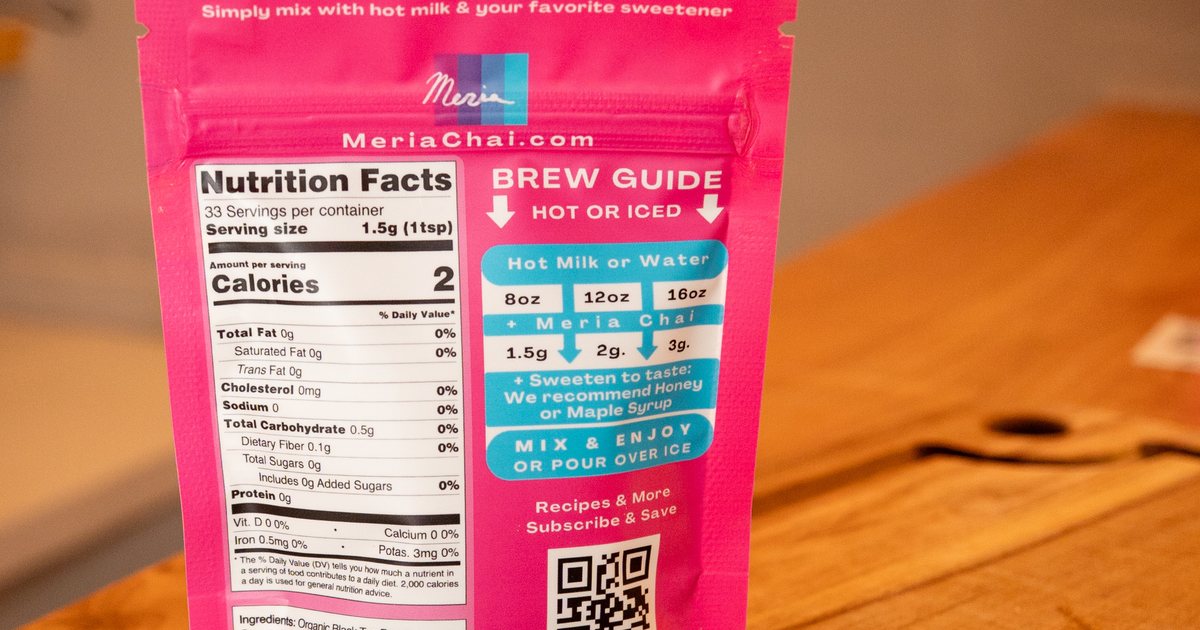
Weigh it rather than scooping it — teaspoons vary more than people think. The brew guide on the pouch is 1.5g for an 8oz cup, 2g for 12oz, 3g for 16oz. Mass-market instructions tend to underdose because the formulations rely on sweetener for body — when you remove the sweetener, you have to bring the spice load up.
Brew long enough
Ground powder is the exception here — it does not steep at all; it needs heat and force in the milk, not time. For whole spices and tea bags: three to four minutes minimum on the stovetop with milk; five minutes or longer if you are brewing with water and adding milk after. Tea bags do not give up their full flavor in ninety seconds. Whole-spice chai needs even longer — closer to seven minutes for the cardamom and clove notes to come through.
Use whole milk or oat milk
Both have natural sweetness from lactose or oat sugars. These are not added sugars; they are part of the milk itself. Skim milk and unsweetened almond milk taste flat by comparison because the fats and natural sugars that carry spice flavor are not there.
Add a vanilla bean or clean vanilla extract
Vanilla is not sweet, but it reads sweet on the tongue. A split bean simmered with the chai for the last minute, or a quarter-teaspoon of pure vanilla extract stirred in at the end, makes an unsweetened cup taste rounder.
Top with a touch of extra cinnamon
Cinnamon increases perceived sweetness without adding any sugar. A small dusting on top of the foam — not stirred in — is the most effective placement. The aroma reaches the nose before the first sip and primes the palate.
A four-week transition that usually works
If your current chai habit involves a sweetener and you want to step away from it without making every cup feel like a sacrifice, four weeks is enough time for most people.
- Week 1. Use half what you normally would.
- Week 2. Cut to a quarter.
- Week 3. Try just a touch.
- Week 4. Brew with no sweetener at all. Notice the spices.
By week four, most people who start this way prefer chai unsweetened. The cup that tasted plain three weeks earlier becomes the cup that finally is not over-sweet. The transition is rapid because sweet, of all the basic tastes, is the one the palate seems to recalibrate quickest — three weeks to a cup that tastes like chai instead of like a sweetener with chai notes. The recipe that lives behind the habit is here: sugar-free chai latte recipe.
Sugar-Free Chai for Specific Dietary Choices
These notes describe how unsweetened chai fits common dietary protocols. They are not medical advice. Discuss your specific dietary choices with your healthcare provider before making changes for medical reasons.
Keto and low-carb
Tea and whole spices contain less than 1g net carbs per serving, so plain unsweetened chai is compatible with most low-carb protocols. Pair with heavy cream, full-fat coconut milk, or unsweetened nut milk; the milk choice matters because milk powder, oat milk, and pre-sweetened concentrates further up the chai market either add carbs directly or carry the sweeteners we have spent the last three thousand words explaining how to spot. The full keto chai guide covers brewing, milk choices, and what to look for on the label. Discuss your specific dietary choices with your healthcare provider.
Whole30
Whole30 prohibits added sweeteners — both real and substitutes. Unsweetened chai with only tea and whole spices fits the rule. Always read the ingredient list before buying: a chai labeled "sugar-free" that lists organic stevia leaf extract, monk fruit extract, erythritol, and natural flavors (a real label we read on the chai aisle last month) is not Whole30-compliant, even though it carries the front-of-pack claim. The seven-sweetener test is the test.
Paleo
Look for chai with only tea and whole spices. The standard paleo disqualifiers — maltodextrin, "natural flavors" carriers, gum stabilizers, and milk powder — appear on most mass-market labels. A clean instant chai with seven or fewer ingredients is the safer default.
Anyone watching added sugar intake
Unsweetened chai means you control the sweetener choice and the amount. That is useful for anyone watching added sugar — for personal preference, dietary protocol, or any other reason. Discuss your specific dietary choices with your healthcare provider.
The Meria Chai Answer
We made Meria Chai because we couldn't find one that met the test we just walked you through. We tried products labeled sugar-free with maltodextrin in the first three ingredients. We tried products labeled "naturally sweetened" with stevia carrying the entire flavor. We tried products with "natural flavors" listed before the spices. None of them gave us a cup we wanted to keep serving. So we built one from the back of the package forward — starting with the ingredient list we wanted to read, and finishing with what shows up on the front of the box.
What's in the pouch:
- Organic black tea
- Organic cinnamon
- Organic ginger
- Organic cardamom
- Organic cloves
- Organic nutmeg
- Organic black pepper
What's not in the pouch:
- 0g added sugar
- No maltodextrin
- No sucralose, stevia, monk fruit, or other non-nutritive sweeteners
- No "natural flavors"
- No milk powder, no dairy, no filler
"We threw out the first three test batches because the spice load was wrong. Then we tried twelve more. The chai that ended up in the pouch is the one we wanted to drink ourselves — not the one we thought a label-reader would want to read about."
— Jesse, Founder
The numbers, plainly:
- 33 servings per 50g pouch
- About 50mg caffeine per serving
- About 5 calories per serving (from the tea and spices)
- Free shipping on every order
- The same recipe Cafe Meria has served in Charlevoix, Michigan since 2023
Five of the seven ingredients — cinnamon, ginger, cardamom, cloves, and nutmeg — come from Red Ape Cinnamon, our spice supplier. Their lab batch-tests for heavy metals and publishes per-lot results at redapecinnamon.com/test-results. The black tea and the black pepper are sourced separately, from suppliers that don't publish public per-lot test data; we hold their certificates of analysis on file but can't link to them externally. We are not a testing lab ourselves, and we do not run our own analytical chemistry. Testing is conducted by our supplier, not in-house. Supplier testing is not the same as zero risk. We share what we know, and we link to what we can.
A note on the rest of the package: Meria Chai is made with vegan ingredients, and it is made in a shared facility that processes other allergens. We say both things together because both are true.
For the longer version of where each of the seven ingredients comes from and why we chose it, see the seven organic ingredients or our Sourcing page. The short version is on the back of the pouch, and it is the same short version we serve at the café every morning.
What We Don't Claim
We don't claim Meria Chai is a treatment for any condition. Sugar-free chai is a beverage, not a medical product, and nothing in this guide is medical advice.
- We don't claim our chai lowers anything, regulates anything, or supports any organ. The seven ingredients are a black tea and six whole spices. They are food, not medicine.
- We don't claim "USDA Organic" on the finished product. Five of seven ingredients are sourced from a USDA-Organic-certified supplier (Red Ape Cinnamon); the black tea and black pepper are sourced separately. The finished pouch is not certified.
- We don't claim our chai is the best chai for any specific medical group. If you have a dietary need that requires medical guidance, talk to your healthcare provider, not a blog post.
- We don't perform our own heavy-metal lab testing. Our spice supplier batch-tests and publishes per-lot results; we link to those reports. Supplier testing is not the same as zero risk.
- We don't claim "sugar-free" as a property of Meria Chai, because we're not making a label-claim about ourselves — we're explaining the regulatory term as it appears on other products. Meria Chai is unsweetened. The label says "0g added sugar." Both are accurate.
FAQs
What does "sugar-free" mean on a chai label?
"Sugar-free" is an FDA-defined labeling term: under 21 CFR 101.60(c)(1), a product can carry the claim if it has less than 0.5g of sugar per reference amount and per serving. The rule is about sugar specifically. It does not prohibit maltodextrin, sucralose, stevia, monk fruit, sugar alcohols, or "natural flavors" — any of which can appear on a chai labeled "sugar-free."
Is "sugar-free chai" the same as "unsweetened chai"?
No. "Sugar-free" is a regulatory claim about sugar; "unsweetened" usually means no sweetener of any kind. A chai with stevia and maltodextrin can be labeled "sugar-free." A chai with just tea and spices is unsweetened. The two often get used interchangeably, which is part of why the label-reading work matters.
How is sugar-free chai different from low-sugar or reduced-sugar chai?
"Reduced sugar" or "less sugar" requires at least 25% less sugar than a reference product, but the result is typically still 5-15g per serving. "Low sugar" has no FDA-defined meaning for foods. Only "sugar-free" carries the under-0.5g floor. Words like "lightly sweetened" are marketing, not regulation.
Does chai naturally contain sugar?
Black tea and whole spices contain trace plant sugars — under 1g per serving in a typical chai. Whole milk and oat milk add naturally-occurring sugars from lactose or oat solids; almond milk and water add none. Trace plant sugars are not the same as "added sugar" on the Nutrition Facts panel.
What hidden sweeteners should I watch for in chai?
Seven appear most often on chai labeled "sugar-free" or "no added sugar": maltodextrin, sucralose, stevia leaf extract, monk fruit extract, erythritol, "natural flavors," and any of the sugar-by-another-name ingredients (honey powder, coconut sugar, brown rice syrup). If any of these appear in the first three ingredients, that is what is carrying the flavor.
Does sugar-free chai contain artificial sweeteners?
It can. The FDA's "sugar-free" claim does not distinguish between artificial sweeteners (sucralose, aspartame), plant-derived non-nutritive sweeteners (stevia, monk fruit), and sugar alcohols (erythritol). The only way to know is to read the ingredient list — the words on the front of the package will not tell you.
What is the lowest-sugar chai I can buy?
The cleanest path is a chai whose ingredient list is just tea and spices, with no other entries. Plain tea-bag chai is one option; a whole-spice instant chai with no fillers is another. Both come in at 0g added sugar with no substitute sweeteners. If the ingredient list runs longer than ten items, the answer is almost always somewhere else.
How much sugar is in a typical café chai latte?
A 16oz café chai latte at a major chain typically carries 30-42g of added sugar, depending on the chain and the syrup. That puts a single drink near or above the daily added-sugar guideline for most adults. We walked through the math in detail in the $6, 240-calorie café chai problem.
How do I make a sugar-free chai latte at home?
Use a heaping teaspoon of clean instant chai or one tablespoon of whole-spice chai per 8oz of milk. Brew long — three to four minutes minimum with milk on the stovetop. Whole milk or oat milk carries the spices best. A vanilla bean and a small dusting of cinnamon on top do most of the work that sweetener does in a sweet version. The full chai latte recipe has the step-by-step.
Is sugar-free chai keto-friendly?
A chai with only tea and whole spices is generally compatible with low-carb protocols at under 1g net carbs per serving. Pair with heavy cream or unsweetened nut milk to keep the cup low-carb. Discuss your specific dietary choices with your healthcare provider. The full keto chai guide covers brewing, milk choices, and label tests.
Is sugar-free chai Whole30-compatible?
A chai with only tea and whole spices fits Whole30. The protocol prohibits added sweeteners of any kind — including stevia, monk fruit, and sugar alcohols — so most products labeled "sugar-free" do not qualify. Always read the ingredient list rather than relying on the front-of-pack claim.
What is the best sweetener to add if I want some sweetness?
For adding to a cup of brewed chai at home, the cleanest options are a small spoon of honey or maple syrup (real sugars, real flavor), a few drops of pure monk fruit or stevia extract (no carbs, but a different flavor profile), or a little allulose (closest to sugar in taste). Each has a different feel in a chai cup: honey adds floral notes, maple adds depth, monk fruit and stevia bring sweetness without weight, allulose disappears into the spice. The version we serve at the café is unsweetened — but if we were adding something at home, it would be a small spoon of honey, stirred in last. Discuss your specific dietary choices with your healthcare provider.
Is sugar-free chai gluten-free and vegan?
Plain instant chai with only tea and spices is gluten-free and made with vegan ingredients. Always check the label — added milk powders or "natural flavors" carriers can change either answer. Meria Chai is made with vegan ingredients and produced in a shared facility that processes other allergens.
How long does an unsweetened chai powder stay good?
Stored in a sealed pouch in a cool, dry pantry, a clean instant chai (tea and ground spices only) holds full flavor for 9 to 12 months. Older powder doesn't go unsafe — it goes flat. Cardamom and clove notes fade first; the cinnamon and ginger carry the longest. If a cup tastes dull and the brew time was right, the powder is past its window.
Is unsweetened chai too bitter to drink?
Most "bitter" cups of unsweetened chai are actually under-spiced cups: not enough powder, not enough brew time, or thin milk. Tea contributes some bitterness by design — that's where the structure of a chai cup comes from. The bitterness reads as flatness when the spices aren't carrying enough weight, and reads as balance when they are. The brewing section above walks through the four levers that move it from one to the other.
Back to the Chai Aisle
We started this guide at the chai aisle. Pick up that box again.
If the front says "sugar-free" and the back has any of the seven sweeteners on the list — maltodextrin, sucralose, stevia, monk fruit, erythritol, "natural flavors," or any sugar-by-another-name — you have your answer. We end every café shift the same way we drink at home: with the cup we would want to drink ourselves. No added sugar, nothing hidden, nothing on the back of the package that needs decoding.
Try the pouch — 0g added sugar, 33 servings, free shipping on every order. 10% off when you subscribe.
Subscribe and save 10% — same chai, delivered on your schedule, cancel any time from your account.
These statements have not been evaluated by the Food and Drug Administration. This product is not intended to diagnose, treat, cure, or prevent any disease.
