
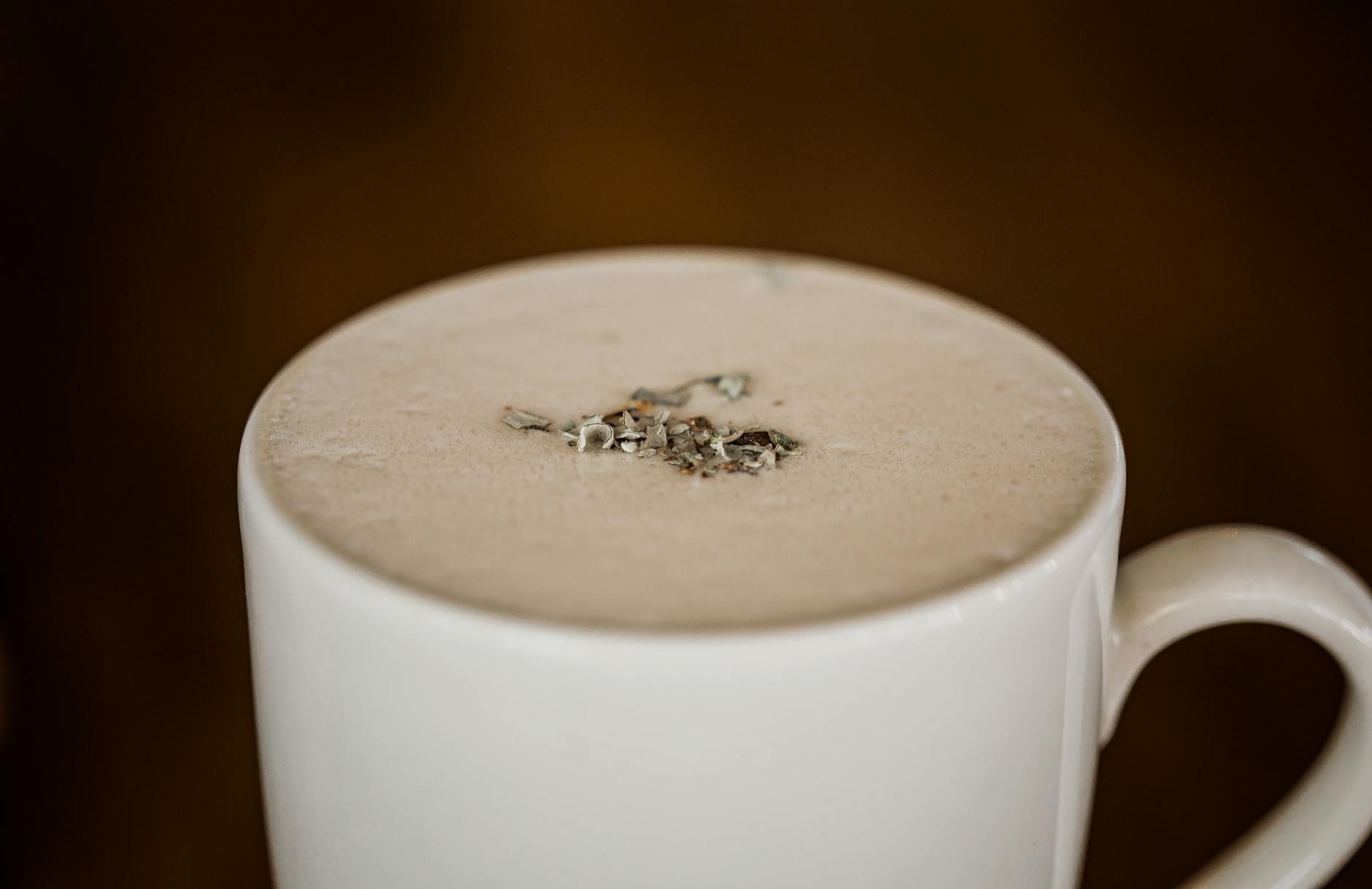
How to Make a Chai Latte at Home
A chai latte is spiced tea combined with steamed or frothed milk. It's one of the most popular café drinks in the world — and one of the easiest to make at home once you know the method.
The problem is that most people's first experience with chai lattes comes from coffee shops, where the drink is made with sweetened concentrate (15-20g of sugar per serving). That's not really chai — it's spice-flavored sugar milk. Real chai tastes completely different: warm, complex, naturally aromatic from actual spices.
At Café Meria in Charlevoix, Michigan, we serve approximately 40 chai lattes on a busy summer day. Every single one is made with the same organic chai powder we sell online — no concentrate, no added sugar. Here are three methods to make café-quality chai lattes at home, from fastest to most traditional.
> "We serve about 40 chai lattes on a busy summer day. Speed matters — but never at the expense of flavor." — Jesse, Founder
Zero sugar · Six organic spices · Café-tested · 58¢ per 8 oz cup · Free shipping on every order · Supplier batch-tested for heavy metals · Small batch
Method 1: Quick Chai Latte (60 Seconds)
This is the method we use at the café — sweetener, powder and milk in one pitcher, steamed together. It is fast enough for a morning rush and tastes like it was simmered for 15 minutes.
Ingredients
- Sweetener to taste, if you want it — honey and maple syrup are our favorites at the café
- Chai powder, weighed: 1.5 g for an 8 oz drink, 2 g for 12 oz, 3 g for 16 oz — the brew guide printed on the pouch. (We use Meria Chai; see our instant masala chai powder buying guide.)
- 6–8 oz milk of choice (oat milk recommended)
No water. This powder is built for milk.
Instructions
- Sweetener into the pitcher first, if you are using any. It disperses far better before anything else is in there.
- Then the chai powder — weighed, not scooped. 1.5 g per 8 oz. A cheap espresso scale is the single thing that makes this repeatable: a heaped spoon and a level one differ by half again as much powder, and that is usually why one cup tastes right and the next does not.
- Then the milk. All of it, cold, straight in. No water, no blooming, no two-stage anything.
- Heat and emulsify in one move. At the café that is the espresso steam wand — it heats and emulsifies simultaneously, which is exactly what this powder wants. At home: a hand mixer, a blender, or warm the milk and use a handheld frother.
- Emulsify completely — not gently. The tea dissolves, but the ground spices only suspend, and they only stay suspended because of heat plus force. A spoon will leave you grit at the bottom.
Iced: same order, same force. Warm and emulsify first, then pour over ice. Mixing this powder straight into cold milk is the one thing guaranteed to give you a gritty cup.
Why This Method Works
This is not a two-stage drink. Sweetener, powder and milk go in together and get emulsified at once,
which is how it is made behind our own counter forty-odd times on a busy summer day.
The reason force matters: the black tea is freeze-dried and genuinely dissolves, but the six ground
spices are insoluble plant solids. They do not dissolve — they suspend. Steam pressure, a blender or a
frother drives them into suspension and holds them there; stirring does not. That single difference is
why a café chai and a home chai made from the same powder can taste completely different.
Cost: approximately $0.58–$0.73 per cup (depending on how much powder you use), compared to $5-7 for a café chai latte.
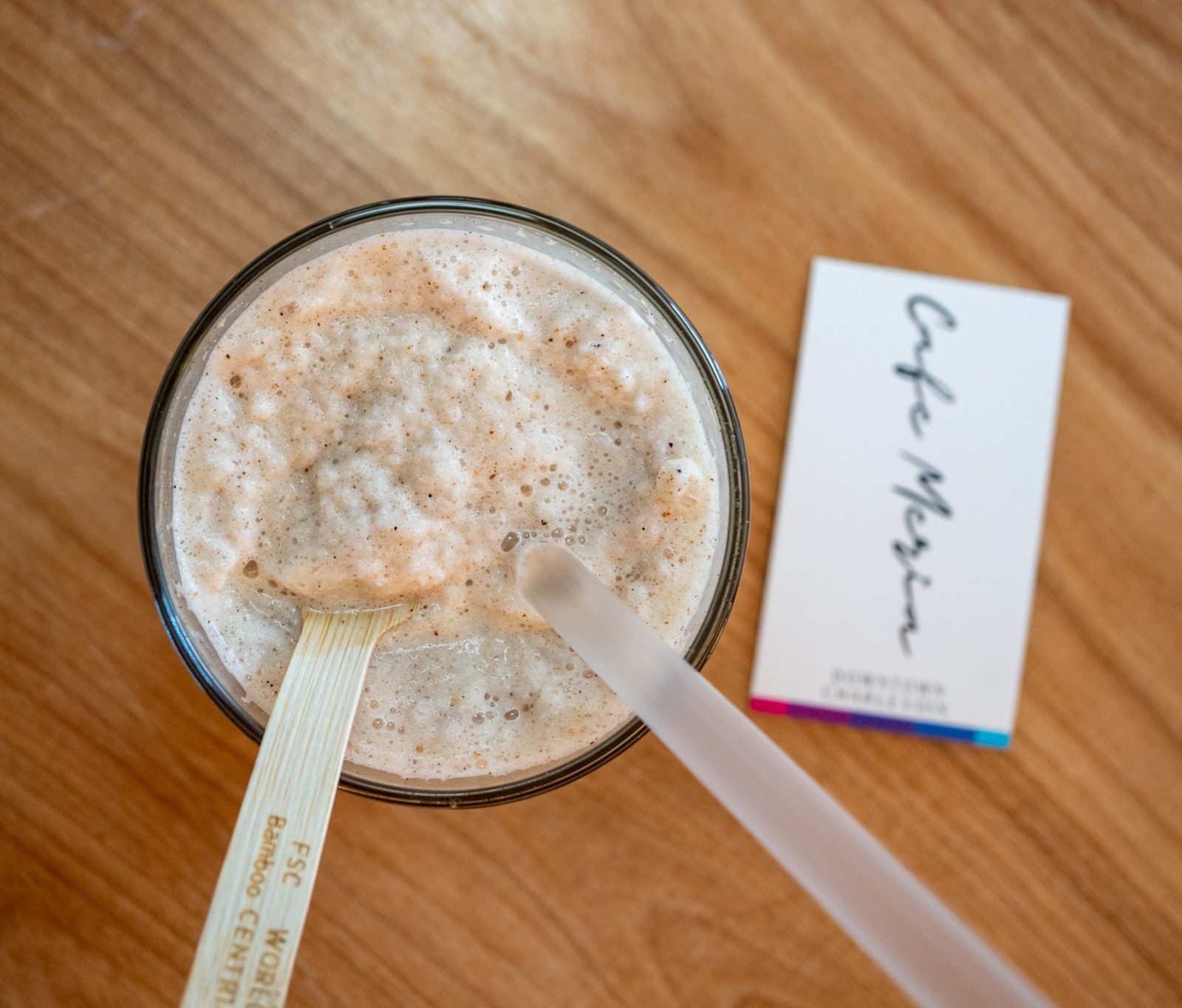
Barista-quality masala chai
No sugar. No stevia. No exceptions.
Meria Chai is black tea and six organic spices — the same blend we pour at the café, with no sweetener of any kind in it. You decide the sweetness, or you don’t.
Get my chai · From $19Free shipping • Cancel anytime
Method 2: Stovetop Chai Latte (5 Minutes)
A middle ground — more hands-on than instant, but faster than the full traditional method. Great for weekends.
Ingredients
- Optional: 1 teaspoon honey or sweetener
- 3 g unsweetened chai powder (about a level teaspoon, for 2 cups)
- 2 cups (16 oz) milk
Instructions
- Sweetener into a small saucepan first, if you are using any. Then the chai powder. Then all the milk. No water.
- Heat over medium, working it the whole time. Don't let it boil — bring it to the point where small bubbles form around the edges and steam rises from the surface.
- Hold it there for 2-3 minutes, still stirring. This gives the spices time to open up in the warm milk, developing deeper flavor.
- Take it off the heat and emulsify it properly — a handheld frother or a hand mixer, fifteen seconds, hard. This is the step that keeps the spices suspended instead of settling into the bottom of your mug.
- Pour and drink.
Why This Method Works
Holding the powder in warm milk lets the fat in the milk bind with the spice oils, creating a richer, more rounded flavor than the quick method — and there is no water in it to thin that out. The extra 4 minutes are worth it when you have the time.
Method 3: Traditional Chai Latte from Scratch (15 Minutes)
This is how chai has been made in India for generations. Whole spices, loose tea, simmered together. When you have 15 minutes and want the full experience, nothing compares.
Ingredients
- 1½ cups water
- 1 cup whole milk (or oat milk)
- 2 tablespoons loose black tea (Assam or CTC works best)
- 4 green cardamom pods, lightly crushed
- 1 cinnamon stick (about 3 inches)
- 4 whole cloves
- 1-inch piece fresh ginger, sliced thin or grated
- 2-3 whole black peppercorns
- Sweetener to taste
Instructions
- Toast the spices. Add cardamom, cinnamon stick, cloves, and peppercorns to a dry saucepan over medium heat. Toast for 60-90 seconds, shaking the pan occasionally, until fragrant. You'll smell cinnamon and cardamom clearly when they're ready.
- Add water and ginger. Pour in 1½ cups water, add the sliced ginger, and bring to a boil.
- Reduce heat and simmer for 5 minutes. The water will take on a golden color from the spices.
- Add tea leaves and steep for 3-4 minutes on low heat. Don't boil the tea — this extracts tannins and makes it bitter. A gentle simmer is what you want.
- Add milk and heat gently. Increase heat slightly and bring just to the point where the mixture starts to rise (you'll see it begin to foam). Immediately reduce heat.
- Strain and serve. Pour through a fine-mesh strainer into mugs. Add sweetener if desired.
Tips for Traditional Chai
- Crush the cardamom pods slightly with the flat side of a knife to release the seeds inside. The seeds carry most of the flavor.
- Grate the ginger for stronger ginger flavor, or slice it thin for a more subtle warmth.
- Assam tea is ideal because its malty, robust flavor stands up to the spices and milk. Lighter teas like Darjeeling get overwhelmed.
- The "rise" is important. When milk-chai starts to rise and foam, it means the proteins are activating and the flavors are melding. Letting it rise once and immediately reducing heat gives you the creamiest result.
The Complete Milk Guide for Chai Lattes
The milk you choose changes everything about your chai latte — flavor, texture, calories, and frothing ability. Here's what we've learned serving chai lattes daily at Cafe Meria.
Dairy Milks
| Milk | Flavor with Chai | Froths? | Calories (8 oz) |
|---|---|---|---|
| Whole milk | Rich, creamy, traditional | Excellent | ~150 |
| 2% milk | Slightly lighter, still creamy | Good | ~120 |
| Skim milk | Thin, lets spices dominate | Fair (watery foam) | ~80 |
Plant-Based Milks
| Milk | Flavor with Chai | Froths? | Calories (8 oz) |
|---|---|---|---|
| Oat milk | Naturally sweet, creamy | Excellent | ~120 |
| Almond milk | Light, nutty undertone | Fair | ~30-60 |
| Coconut milk | Tropical, distinct | Good | ~45-80 |
| Soy milk | Neutral, protein-rich | Good | ~80-100 |
| Cashew milk | Creamy, mild | Fair | ~25-50 |
Our Recommendation
Oat milk is the best all-around choice for chai lattes. Here's why:
- Its natural sweetness complements chai spices (especially cinnamon and cardamom), often eliminating the need for added sweetener
- It froths beautifully — almost as well as whole milk
- The creamy texture gives body to the drink without heaviness
- It's the most popular milk choice among our café customers
For traditional flavor, whole milk is hard to beat. The milk fat binds with spice oils in a way that plant milks don't quite replicate — this is why traditional Indian chai is always made with whole milk or buffalo milk.
For lowest calories, unsweetened almond milk lets the chai spices shine through with minimal caloric impact (a chai latte with almond milk is roughly 35-65 calories total).
How to Make an Iced Chai Latte
Iced chai lattes are the most ordered drink at Café Meria during summer. The key is that water is what makes an iced chai watery. Build the whole drink in milk, warm it, emulsify it completely, then pour it over ice.
Quick Iced Chai Latte
- Sweetener into an empty pitcher first, if you want it
- Then the chai powder, weighed — 1.5 g for 8 oz, 2 g for 12 oz, 3 g for 16 oz
- Then all the milk, straight in. No water
- Warm it and emulsify completely — steam wand, hand mixer, blender or handheld frother
- Fill a glass with ice and pour
Pro tip: For a stronger iced chai that won't taste watered down as ice melts, keep the powder at the dose for your cup size and use a little less milk. The ice makes up the volume.
For the full iced chai guide with more variations, see our Iced Chai Latte Recipe.
Chai Latte Variations
Once you've mastered the basic chai latte, try these popular variations.
Dirty Chai Latte
Add a shot of espresso (or 2 oz strong brewed coffee) to any chai latte method above. The coffee adds depth and an extra caffeine kick — about 63-65mg on top of chai's 40-50mg, so about 105-115mg in all. Full recipe: Dirty Chai Recipe.
Vanilla Chai Latte
Add ½ teaspoon vanilla extract to your chai latte. The vanilla rounds out the spice profile and adds a subtle sweetness. Works especially well with oat milk.
Honey Chai Latte
Put 1-2 teaspoons of raw honey in the pitcher first, before the powder and the milk. Honey complements ginger and cinnamon particularly well. Use less honey than you think — the chai spices do most of the flavor work.
Golden Chai Latte
Add ¼ teaspoon ground turmeric to your chai. Turmeric and the black pepper already in chai are a classic combination. The result is a golden-hued latte with an earthy undertone.
Chai Affogato
Make a double-strength chai: 0.75 g of powder (about a level quarter teaspoon) emulsified into 2 oz of hot milk, no water. Pour over a scoop of vanilla ice cream. An indulgent dessert drink.
Why Café Chai Lattes Taste Different from Homemade
If your homemade chai latte doesn't taste like what you get at a coffee shop, that's actually a good sign. Here's why.
Most cafés make chai lattes from sweetened concentrate — a thick, syrupy liquid where sugar is typically the first or second ingredient. A 16oz café chai latte contains:
- About 42g of sugar (equivalent to 10.5 teaspoons)
- 240+ calories
- Artificial or "natural" flavors instead of real spices
When you make chai at home with real spices or unsweetened chai powder, the flavor profile is completely different: more complex, more aromatic, and not dominated by sweetness. Your first sip might seem "less sweet" — that's because you're actually tasting the spices instead of sugar.
Most people who switch to real chai find they can't go back. The concentrated sweetness of café chai starts to taste one-dimensional.
The Economics: Homemade vs Café
| Café Chai Latte | Homemade (Instant) | Homemade (Scratch) | |
|---|---|---|---|
| Cost | $5-7 | $0.58 (8 oz) – $1.19 (16 oz) | $1.50-2.00 |
| Sugar | about 42g | 0g | 0g (before sweetener) |
| Calories | 240+ | 35-155 (8 oz) | 90-150 |
| Time | 5 min (plus drive/wait) | 60 seconds | 15 minutes |
| Real spices | Usually no | Yes | Yes |
If you drink one chai latte per day, switching from café to homemade saves approximately $1,400-2,300 per year.
Common Mistakes (and How to Fix Them)
Mistake: Stirring the powder into cold milk with a spoon.
Fix: Heat and force, not water. The tea dissolves, but the ground spices only suspend — a spoon in cold milk leaves them clumped at the bottom. Warm the milk and emulsify with a steam wand, hand mixer, blender or frother.
Mistake: Pouring water at a rolling boil onto the spices in the traditional method.
Fix: Let it cool for 30 seconds off the boil (aim for ~180°F / 82°C). Boiling water can scorch delicate spice compounds, especially cardamom.
Mistake: Over-steeping tea in the traditional method.
Fix: Keep tea at a gentle simmer, not a rolling boil. More than 4-5 minutes of steeping extracts tannins that make chai bitter and astringent.
Mistake: Adding sweetener before tasting.
Fix: Always taste first. Quality chai with real cinnamon and cardamom has natural perceived sweetness. Many people find they don't need any added sugar.
Mistake: Using weak tea in the traditional method.
Fix: Use a strong, malty tea like Assam or CTC (crush-tear-curl). Delicate teas like Darjeeling or green tea get completely overwhelmed by the spices and milk.
Mistake: Not heating the milk enough.
Fix: Warm milk extracts more flavor from chai and creates better froth. Room-temperature milk makes a flat, underwhelming latte.
FAQs
How much caffeine is in a chai latte?
Approximately 40-50mg per cup, about half of coffee (95-165mg). The L-theanine in black tea moderates the caffeine, giving you alert energy without jitters. For more details, see our Chai Caffeine Content guide.
Does real chai need added sugar?
No. Quality chai made with real spices has natural complexity and perceived sweetness from cinnamon and cardamom. Most people who try unsweetened chai with real spices find they prefer it. Start without sugar and add only if needed. For a deeper look at zero-sugar options, see our sugar-free chai guide.
What's the difference between masala chai and a chai latte?
Masala chai ("spiced tea" in Hindi) is traditionally simmered tea and spices in a mix of water and milk. A chai latte is the café adaptation: brewed or instant chai combined with a larger proportion of steamed milk, similar to how a caffè latte is espresso plus steamed milk.
Can I make chai lattes ahead of time?
Make the whole thing in milk and refrigerate it. Sweetener, weighed powder and all the milk into a jar, emulsified hard, cooled and sealed. Shake it before you pour, then drink it cold over ice or reheat and re-froth it. It keeps for 2-3 days in the fridge.
What's the best chai powder for lattes?
Look for unsweetened powder where tea or spices are the first ingredient — not sugar, maltodextrin, or "natural flavors." The ingredient list should be short (under 10 items). For our full buying guide, see Best Instant Chai 2026.
Why does my homemade chai taste weak?
Three common causes: not enough powder (weigh it — 1.5 g for 8 oz, 2 g for 12 oz, 3 g for 16 oz), too much milk for the dose you used, or not enough heat and force. A spoon in lukewarm milk leaves most of the spice sitting on the bottom instead of suspended in the drink.
Is a chai latte healthy?
It depends entirely on how it's made. A 16 oz café chai latte made from sweetened concentrate has about 42g sugar and 240+ calories. An 8 oz homemade chai latte with unsweetened powder and oat milk has 0g added sugar and roughly 95-125 calories. Same name, very different drinks. See our Chai Latte Calories breakdown.
Make It at Home
Try the unsweetened chai latte powder → The same organic chai powder we use daily at Café Meria. 7 ingredients, 0g sugar, 33 servings per pouch. Make café-quality chai lattes at home for about $0.58/cup.
Free shipping on every order. Subscribe and save 10%.
