
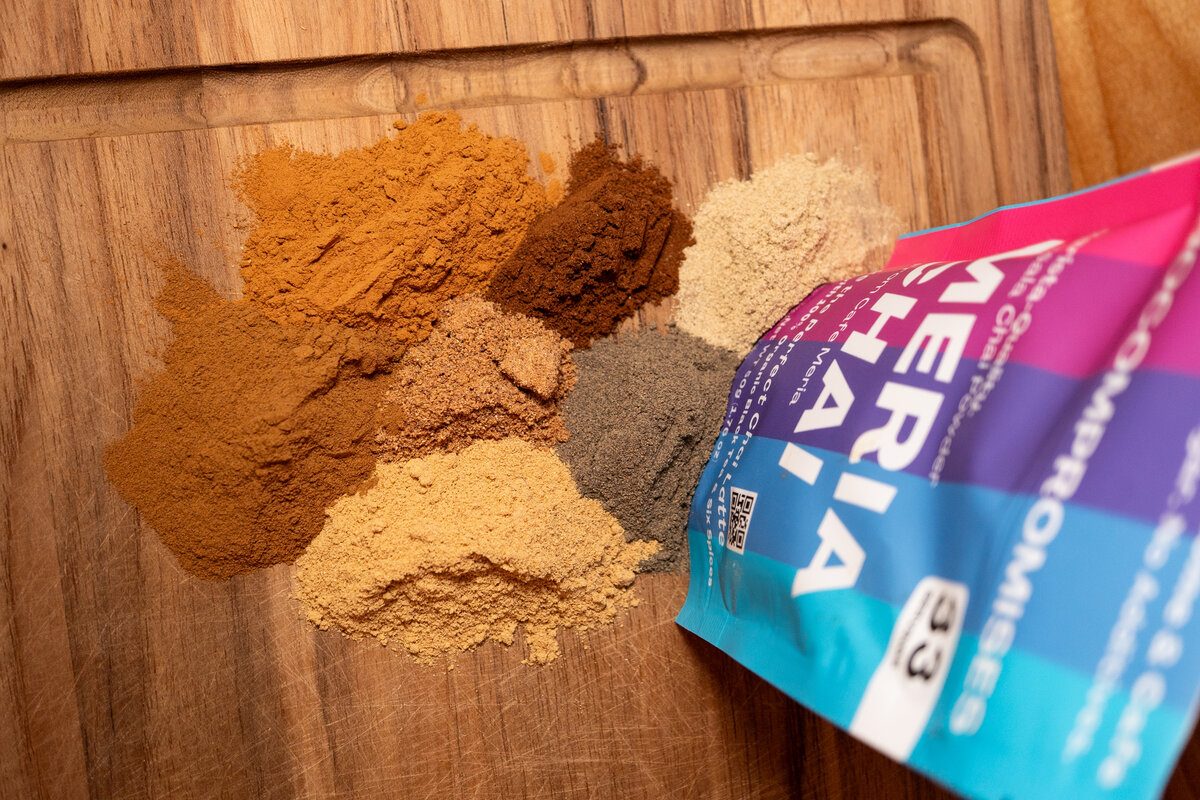
Why People Are Asking About Lead in Chai
Between 2023 and 2024, a series of FDA recalls brought spice contamination into the spotlight. The cinnamon behind a recall of children's applesauce pouches measured 2,270 to 5,110 ppm of lead, and in March 2024 the FDA warned about retail ground cinnamon at 2.03 to 3.4 ppm. There is no federal limit for lead in spices.
For people who drink chai regularly — where cinnamon, ginger, and other spices are core ingredients — this raises a reasonable question: Is my chai safe?
The answer depends on where those spices come from and whether anyone has tested them.
Zero sugar · Six organic spices · Café-tested · 58¢ per 8 oz cup · Free shipping on every order · Supplier batch-tested for heavy metals · Small batch
How Heavy Metals End Up in Spices
Heavy metal contamination in spices is typically not intentional. It results from:
Soil Contamination
Spices are agricultural products that absorb metals through root systems. Areas with histories of industrial activity or heavy pesticide use can have elevated lead, arsenic, and cadmium in the soil. Root-based spices like turmeric and ginger are particularly susceptible.
Processing and Handling
Aging equipment, contaminated drying surfaces, and shared processing lines can introduce trace metals during manufacturing.
Intentional Adulteration
In some cases, lead chromate has been added to turmeric to enhance color or to ground cinnamon to increase weight. The 2023 applesauce recall was linked to cinnamon with lead levels so high that accidental contamination was unlikely.
Supply Chain Complexity
A single batch of cinnamon might be grown in one country, processed in another, and packaged in a third. Each handoff introduces the possibility of contamination.
Barista-quality masala chai
No sugar. No stevia. No exceptions.
Meria Chai is black tea and six organic spices — the same blend we pour at the café, with no sweetener of any kind in it. You decide the sweetness, or you don’t.
Get my chai · From $19Free shipping • Cancel anytime
Which Spices Are Most Affected
Higher Concern
| Spice | Why | Key Finding |
|---|---|---|
| Cinnamon | Bark absorbs soil metals; some adulteration documented | FDA alert on ground cinnamon at 2.03-3.4 ppm (March 2024) |
| Turmeric | Root crop; adulteration with lead chromate documented | Studies found lead chromate added for color in some supply chains |
| Oregano | Leaf crop; widely adulterated | European studies found lead and cadmium above EU limits |
Moderate Concern
Ginger (root crop, long soil contact), chili powder, cumin
Lower Concern (Typical Chai Spices)
Black pepper (berry), cardamom (pod/seed), cloves (flower bud), nutmeg (seed) — less soil contact means less uptake.
What the Actual Risk Levels Are
Dose Matters
A cup of chai contains a few grams of total spice blend. If the cinnamon has lead at 0.5 ppm, the lead exposure from one cup is measured in micrograms — a tiny fraction of what the FDA considers actionable.
This is fundamentally different from a child eating multiple applesauce pouches where cinnamon tested at 3-5 ppm or higher.
FDA Reference Points
| Context | Lead Level |
|---|---|
| Federal limit for lead in cinnamon or any spice | None (the FDA acts case by case) |
| New York State recall threshold | 1 ppm |
| Ground cinnamon in the FDA's March 2024 alert | 2.03-3.4 ppm |
| Cinnamon behind the 2023 applesauce recall | 2,270-5,110 ppm |
| Our supplier's own limit for cassia (Red Ape Cinnamon) | 0.1 ppm; results "usually below .05 ppm" |
Cumulative Exposure Matters Most
Lead is a cumulative toxin — your body doesn't efficiently excrete it. For products consumed daily, even low levels add up over time. The people who should pay the most attention:
- Daily chai drinkers
- People taking cinnamon or turmeric supplements
- Parents giving spiced foods to children
- Pregnant women
For occasional chai drinkers, exposure from trace levels in well-sourced spices is minimal.
The 2023-2024 Cinnamon Recalls
What Happened
The FDA recalled cinnamon applesauce pouches after children were found with elevated blood lead levels. The FDA measured 2,270 to 5,110 ppm of lead in the cinnamon used, which it traced to likely intentional adulteration.
What Expanded Testing Revealed
- The FDA's March 2024 alert covered ground cinnamon products at 2.03 to 3.4 ppm
- Consumer Reports (September 2024) found 12 of 36 cinnamon products above New York's 1 ppm threshold
- Some previously reputable brands had elevated levels
- The problem wasn't limited to one country or supplier
What the Recalls Exposed
- Testing gaps — many brands had never tested for heavy metals
- Supply chain opacity — companies couldn't trace cinnamon to source
- Certification limitations — "organic" and "natural" don't test for heavy metals
- Regulatory lag — FDA doesn't require pre-market testing of spices
What "Tested" Actually Means vs. Marketing
After the recalls, many brands added "tested for purity" language. But these phrases can mean almost anything.
Vague Claims
| Claim | What It Doesn't Guarantee |
|---|---|
| "Tested for purity" | May not include heavy metal testing |
| "Quality verified" | Doesn't specify what was checked |
| "Lab tested" | Doesn't specify which contaminants |
| "Certified lead-free" | This certification does not exist |
What Real Testing Looks Like
- Third-party laboratory analysis using validated methods (ICP-MS)
- Certificate of Analysis (COA) with specific numerical results for lead, arsenic, cadmium, mercury
- Batch-level testing — not just a single sample from years ago
- Willingness to share results on request

How to Evaluate a Brand
Questions to Ask
- "Do you test your spices for heavy metals?"
- "Can you provide a Certificate of Analysis for your current batch?"
- "Which lab performs your testing?"
- "How often do you test?"
Green Flags
- Proactively mentions testing with specific numbers (ppm levels)
- References a third-party lab by name
- Tests at the batch level
- Shares COA documentation on request
Red Flags
- Vague language only ("premium quality," "carefully sourced")
- Cannot name testing lab or frequency
- Claims a certification that doesn't exist
What Meria Chai Does
We source our spices from a supplier that provides batch testing documentation for heavy metals:
- Each batch comes with testing documentation. Our supplier tests incoming batches and provides Certificates of Analysis.
- We review COA reports for lead, arsenic, cadmium, and mercury. Levels have consistently come in well below the thresholds that triggered the 2023-2024 recalls.
- We chose our supplier based on testing, not price. This is why Meria Chai costs $0.58/serving instead of $0.30.
What We Don't Claim
- We don't claim "certified lead-free" — that certification doesn't exist
- We don't perform in-house lab testing — we rely on our supplier's third-party testing
- We don't claim zero heavy metals — trace amounts exist naturally in all agricultural products
We'll share our supplier's most recent Certificate of Analysis with anyone who asks. Visit our Sourcing page for more details.

Practical Steps for Chai Drinkers
- Don't panic — but don't ignore it. The issue is real but manageable with informed choices.
- Prioritize daily-use products. Occasional chai is minimal risk. Daily consumption warrants checking your brand's testing.
- Ask your brand. The response — or lack thereof — tells you a lot.
- Read labels carefully. "Natural," "premium," and "pure" have no regulatory meaning regarding heavy metal testing.
- Consider the whole picture. Total lead exposure comes from many sources. Reducing where you can is reasonable without extreme measures.
FAQs
Is there lead in chai?
Chai spices — particularly cinnamon and ginger — can carry trace levels of lead depending on sourcing. Whether a specific product contains concerning levels depends on the supplier and whether spices have been tested. Well-sourced, tested spices typically have levels far below FDA action thresholds.
Which spices have the most heavy metals?
Cinnamon, turmeric, and oregano show the highest contamination rates. Root crops and bark are more susceptible due to prolonged soil contact.
Is it safe to drink chai every day?
Yes, provided the spices are properly sourced and tested. Daily consumption means cumulative exposure matters more, making batch-level testing particularly important.
Are organic spices safer from heavy metals?
Organic certification addresses pesticides, not heavy metals. Organic cinnamon can contain lead just as conventional can. The key factor is supplier testing, not organic status alone.
Does Meria Chai test for lead?
We don't do our own testing. We source from a supplier that does their own batch testing and provides documentation (COAs) for heavy metals including lead, arsenic, cadmium, and mercury. We'll share our supplier's documentation with any customer who asks.
What is a Certificate of Analysis?
A formal document from a laboratory listing specific test results — the concentration of individual heavy metals in parts per million. It's the standard way to verify that testing was performed and what results were.
How much lead is too much?
There is no federal limit (here's why). New York recalls spices above 1 ppm. The ground cinnamon in the FDA's 2024 alert tested at 2.03 to 3.4 ppm; our supplier holds cassia to 0.1 ppm.
See our full sourcing transparency → | Try the unsweetened chai powder →
