
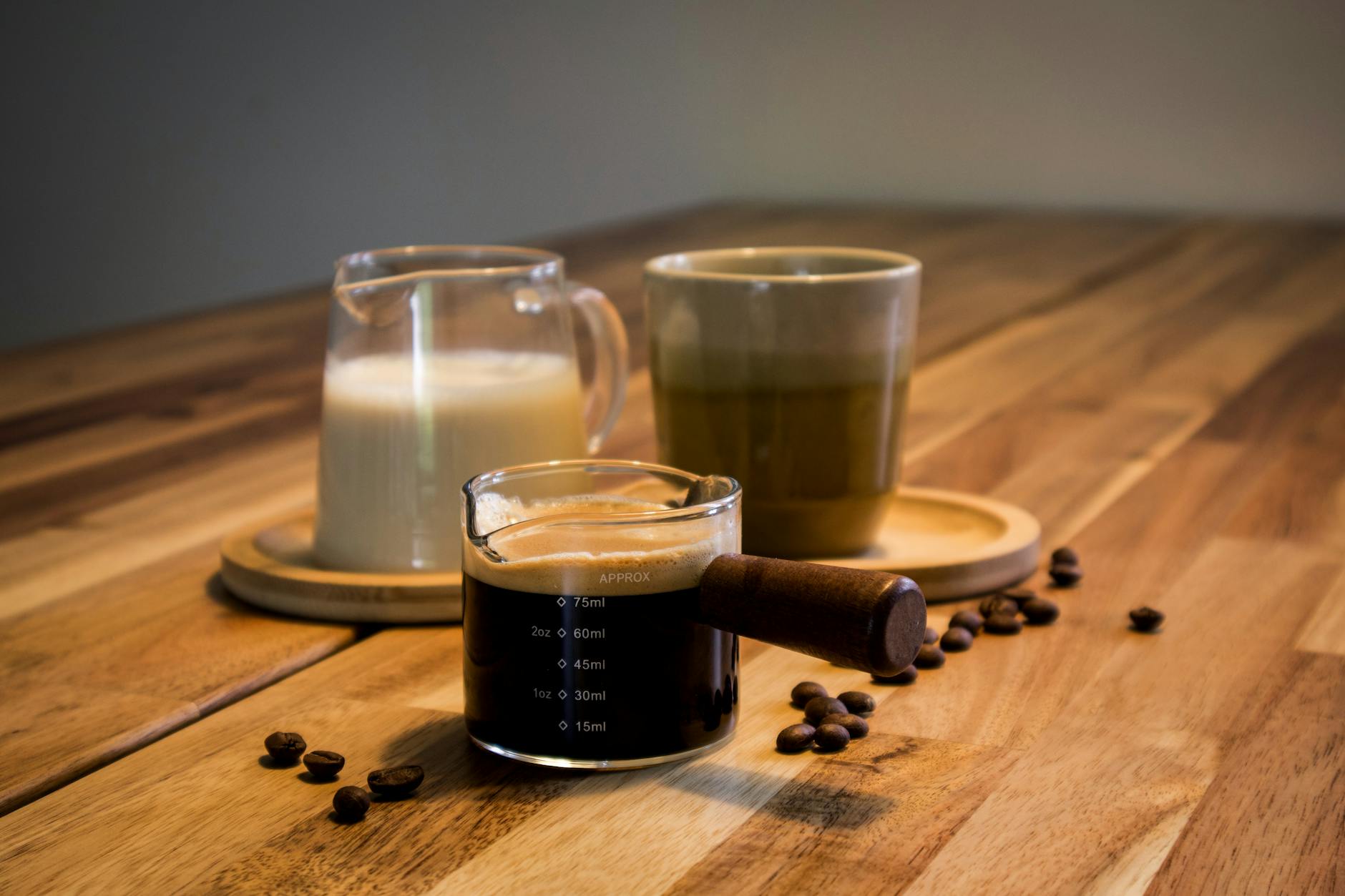
Chai vs Coffee: The Real Comparison
Both chai and coffee are beloved morning rituals, each with millions of devoted drinkers. But they're fundamentally different beverages that affect your body, your wallet, and your day in distinct ways.
This guide breaks down every meaningful dimension: caffeine, antioxidants, calories, sugar, cost per cup, and the subjective experience of drinking each one.
Zero sugar · Six organic spices · Café-tested · 58¢ per 8 oz cup · Free shipping on every order · Supplier batch-tested for heavy metals · Small batch
Caffeine: The Numbers
| Beverage | Caffeine per Cup |
|---|---|
| Chai (black tea base) | 25-50mg |
| Drip coffee (8 oz) | 95-165mg |
| Espresso (1 shot) | 63mg |
| Green tea (8 oz) | 25-40mg |
| Dirty chai (chai + espresso) | about 105-115mg |
A cup of chai has roughly one-third to one-half the caffeine of a cup of coffee. But caffeine content alone doesn't tell the full story.
Barista-quality masala chai
No sugar. No stevia. No exceptions.
Meria Chai is black tea and six organic spices — the same blend we pour at the café, with no sweetener of any kind in it. You decide the sweetness, or you don’t.
Get my chai · From $19Free shipping • Cancel anytime
The L-Theanine Effect: Why Chai Caffeine Feels Different
Black tea contains L-theanine, an amino acid not found in coffee. It has been studied for its effects on attention, especially when taken together with caffeine.
A study published in Nutritional Neuroscience found that the combination of L-theanine and caffeine was associated with better attention and improved task-switching accuracy compared to caffeine alone. Participants reported feeling alert but calm — not wired.
Coffee: more caffeine per cup, which many people feel as a stronger, faster lift.
Chai: about half the caffeine, alongside L-theanine. Many people describe it as a steadier feel. Individual responses vary, and that is a description, not a health claim.
Antioxidants and Beneficial Compounds
Chai's Antioxidant Profile
Chai delivers antioxidants from multiple sources:
| Source | Key Compounds |
|---|---|
| Black tea | Polyphenols (theaflavins, thearubigins) |
| Cinnamon | Cinnamaldehyde, polyphenols |
| Cloves | Eugenol (one of the highest antioxidant concentrations of any food) |
| Ginger | Gingerols, shogaols |
| Cardamom | Terpenes, flavonoids |
| Black pepper | Piperine (the source of pepper's heat) |
Coffee's Antioxidant Profile
Coffee is the single largest source of antioxidants in the Western diet, primarily from chlorogenic acids, melanoidins, and trigonelline.
Neither is "better." Coffee has more total antioxidant content per cup, but chai provides a wider variety from six different sources. Some research suggests diversity of antioxidant intake matters, not just volume.
Calories and Sugar
Here's where it depends entirely on preparation.
| Drink | Calories | Sugar |
|---|---|---|
| Black coffee (8 oz) | 2-5 | 0g |
| Plain chai (no milk) | 0-5 | 0g |
| Homemade chai latte (8 oz oat milk, unsweetened) | 95-125 | 0g added |
| Coffee shop latte (whole milk) | 190-250 | 17-18g |
| Coffee shop chai latte (16 oz) | 240-340 | about 42g |
The calorie problem with chai isn't chai itself — it's that most coffee shops use pre-sweetened concentrate where sugar is the first ingredient. A homemade chai latte with unsweetened organic chai powder is one of the lowest-calorie flavored drinks you can make. If you want zero added sugar, an unsweetened chai powder like Meria Chai is the simplest path.
Digestive Comfort
Coffee is more acidic than tea, and some people find it hard on the stomach. Chai is usually made with milk, which many people find gentler. Ginger and cardamom have a long tradition after meals, though research on them uses supplement doses, not the amount in a cup. If you have reflux or another stomach condition, ask your doctor what suits you.
Cost Per Cup
| Daily Habit | Cost per Cup | Annual Cost |
|---|---|---|
| Home-brewed drip coffee | $0.25-0.50 | $91-182 |
| Homemade chai latte | $0.58 (8 oz) – $1.19 (16 oz) | $210-434 |
| Coffee shop latte | $4.50-6.50 | $1,642-2,372 |
| Coffee shop chai | $5.50-7.00 | $2,007-2,555 |
Homemade chai costs slightly more than home-brewed drip coffee — about $0.15-0.30 more per cup because of the milk. But switching from coffee shop chai to homemade saves $1,400-2,300/year. The cheapest path to that math is a quality instant masala chai powder — no concentrate, no sugar, no equipment beyond a kettle.
Health Comparison Summary
| Factor | Chai | Coffee |
|---|---|---|
| Caffeine | 25-50mg | 95-165mg |
| L-theanine | Yes | No |
| How it feels (reported) | Steadier for many people | Stronger, faster lift |
| Ingredients | 7 (tea + 6 spices) | 1 (coffee bean) |
| Acidity | Low | Higher |
| Calories (homemade) | 47-160 (with milk) | 2-5 (black) |
| Cost (homemade) | $0.58/cup at 8 oz, $1.19 at 16 oz | $0.25-0.50/cup |
| Spices | 6 | None |
Swapping the Morning Coffee
The switch that sticks is the one that takes no longer than what it replaces. Weigh 1.5 g of chai into the
pitcher (about a level half teaspoon), add your sweetener if you want any, pour in all the milk, and heat and
froth it together. Drink it beside breakfast
rather than instead of it: the spices are assertive on an empty stomach, and the caffeine arrives more slowly
than coffee's, so the lift lands mid-meal rather than before it.
If you are coming off a two-cup coffee habit, one chai will feel lighter. That is the caffeine difference in
the table above, not a failure of the chai. Most people who stay switched do it by keeping coffee for the
days they need it and making chai the default, rather than by quitting anything.
For a Long Study or Work Session
The reason chai suits a three-hour session is in the numbers above: roughly half the caffeine of coffee,
alongside the L-theanine that comes with black tea. That combination is why a chai session tends to feel
level rather than spiky, and why a second cup at hour two is a reasonable idea where a second coffee often
is not.
Practical notes: make it unsweetened if the session is long, because a sweetened chai is a sugar curve you
will feel at hour two; keep water beside it, since caffeine of any kind is a diuretic; and stop drinking it
about six hours before you intend to sleep. Caffeine's half-life is roughly five to six hours, so a 4 pm cup
still has half its caffeine in you at 10 pm.
Who Should Choose Chai
Chai is the better fit if you want less caffeine per cup, like the taste of warm spices, and prefer a milk drink.
Who Should Choose Coffee
Coffee is the better fit if you need maximum caffeine, prefer bold roasted flavor, want the lowest cost per cup.
Why Not Both?
Many people find the ideal routine uses both. Morning coffee for the stronger kick, afternoon chai for sustained focus without disrupting sleep. There's no rule that says you have to pick one.
FAQs
Is chai healthier than coffee?
Neither is inherently "healthier." Homemade chai with real spices is low in calories without added sugar. Black coffee is nearly zero-calorie with high antioxidants. Both are good choices. The unhealthy versions are coffee shop drinks loaded with sweeteners.
Can I drink chai if I'm trying to quit coffee?
Yes. Chai provides moderate caffeine (25-50mg) with L-theanine for calm alertness, making it a natural step-down from coffee. Many people use chai as a bridge when reducing caffeine.
Does chai have enough caffeine to wake me up?
For most people, yes. Chai's 25-50mg combined with L-theanine provides noticeable alertness — a different quality of wakefulness, less intense but sustained and without jitters.
Is chai better for anxiety than coffee?
Chai has about half the caffeine of coffee per cup, which is the main reason some people who find coffee too strong prefer it. Individual responses vary; if anxiety is a health concern, talk to your doctor.
Does chai stain teeth less than coffee?
Generally, yes. While black tea contains tannins, the effect is less pronounced than coffee, especially when chai is prepared with milk.
Is chai good for weight loss?
Chai isn't a weight-loss drink, but homemade chai is low in calories (about 35-155 for 8 oz, depending on the milk). Replacing a 300-calorie sugary coffee drink with a 95-125-calorie oat-milk chai saves about 175-205 calories per day.
Try Real Chai
Get the unsweetened chai powder → Seven organic ingredients, zero sugar, the same recipe served daily at Café Meria in Charlevoix, Michigan. Each pouch makes 33 cups at ~$0.58 each.
Free shipping on every order.
These statements have not been evaluated by the Food and Drug Administration. This product is not intended to diagnose, treat, cure, or prevent any disease.
